Paper Weaving with Watercolors
With Molly Elkind
This program is part of Handwork 2026, presented by Craft in America
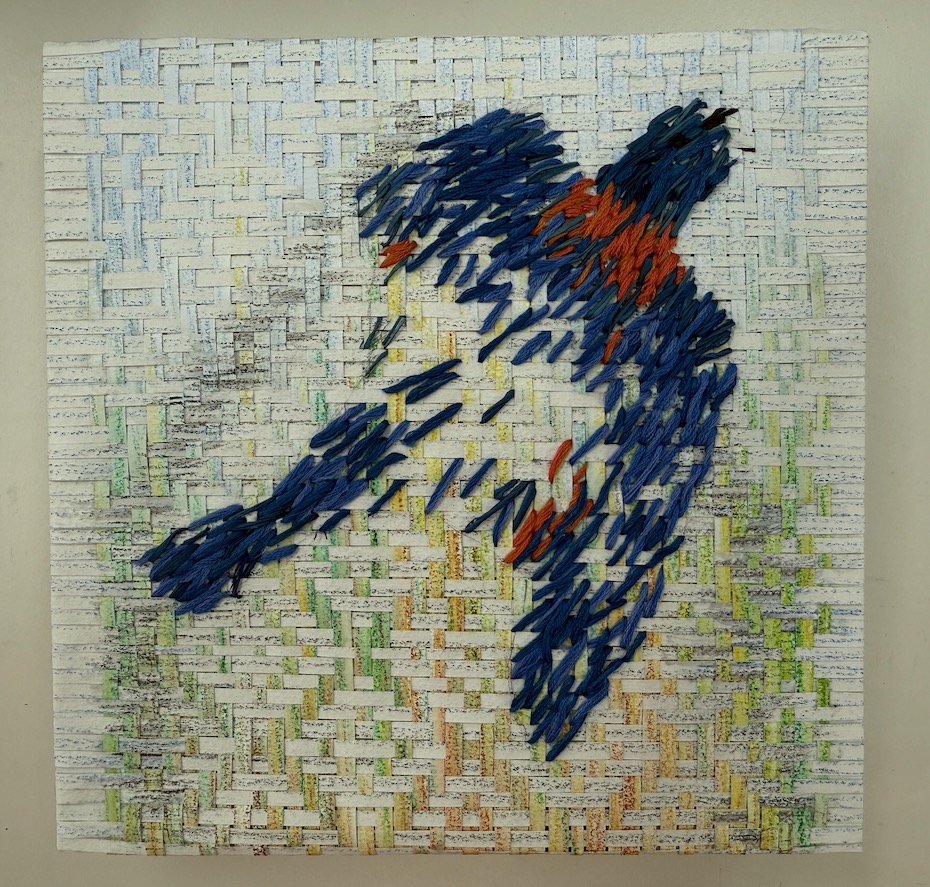
Paper weaving is a quick and fun way to play with color, image, and pattern—without a loom! Even if you’ve never seen a weaving draft and don’t know warp from weft, you’ll be weaving by the end of the workshop. A paper-woven surface is also great for adding collage and mixed media to, so come explore the possibilities!
Paper weaving is even more fun when you work with papers you’ve designed yourself. So we’ll begin by using watercolors to do surface design on papers that we’ll later slice up for weaving. For inspiration we will view the diverse work of several artists working in this medium today. You may also bring your own previously-decorated or found papers.
Through lecture and demonstration, you will learn how to choose papers for weaving, how to decorate them, how to cut strips, choose a weave structure, read a weaving draft, and how to do the actual weaving.
You can also experiment with added other media to your weaving such as dried plants, threads or yarns, or other weaveable elements. We will emphasize choosing papers and weave structures that create maximum visual interest and interaction between image and weave. Finally, we will look at how to finish and mount your completed weaving.
Molly will share several handouts and resources. Previous weaving experience is helpful but not required.


Two-Day Workshop
Day 1 – Friday, February 13, 2026
Day 2 – Saturday, February 14, 2026

- Skill level All
- Age appropriate 14+ (minors must have a parent on site)
- Materials fee $15 (includes watercolor paper, rotary paper cutters, papers and cut strips, raffia, brushes and painting tools (cups, lids), artist’s tape, skewers, and tapestry needles).
- Students should bring
-Papers: either printed photographs or decorated papers (painted or found papers such as magazine pages, scrapbook papers, handmade or fine art papers). A weight of 90-140lb is ideal—something heavier than 20-lb printer paper is easier to weave with, if possible.
-Watercolor paints of your choice and a few brushes, a wide (1-2”) flat brush and a couple small round and/or flat ones. We will strive for large areas of color and pattern rather than highly detailed images. Molly will also have sets of watercolor crayons available to purchase ($25 and up), and jar lids, cups and brushes to borrow.
-Work surface: 2 pieces of cardboard, foam core or matboard at least 2” larger on all sides than the papers you are weaving with.
-Mixed media items (Optional): dried grasses or small flowers, yarns, paper or natural raffia, large tapestry needle, unusual found materials.
-Lunch, a drink, and note-taking materials.
Instructor

 Molly Elkind
After focusing on tapestry weaving for fourteen years, Molly Elkind’s recent work explores weaving with paper and mixed media that include painted and found images, threads and natural elements. Since 2018, Molly has been inspired by New Mexico’s high desert landscape, which is rugged, fragile, beautiful–and vulnerable to wildfire and drought. The structure of weave offers a language with endless expressive possibilities. Woven structures are an apt metaphor for what we know about the functioning of earth’s ecosystems, and the mutual disruption of image and pattern in Molly’s woven collages evokes this. Molly earned an M.A. in Studio Art from the Allen R. Hite Art Institute at the University of Louisville in 2002. Exhibition highlights include two solo exhibits in Atlanta and numerous juried and invitational shows nationwide since 1996. Molly has been published in a number of fiber art-related publications, and her work is in several private collections. Her blog Molly Elkind: Talking Textiles has been published for 10 years. Besides making art, Molly is passionate about teaching it, with a particular focus on design principles, processes, and methods of critique. She is based in Santa Fe, New Mexico and teaches both online and in person for fiber guilds and conferences. When not in her studio Molly can be found out hiking the trails near her home.