
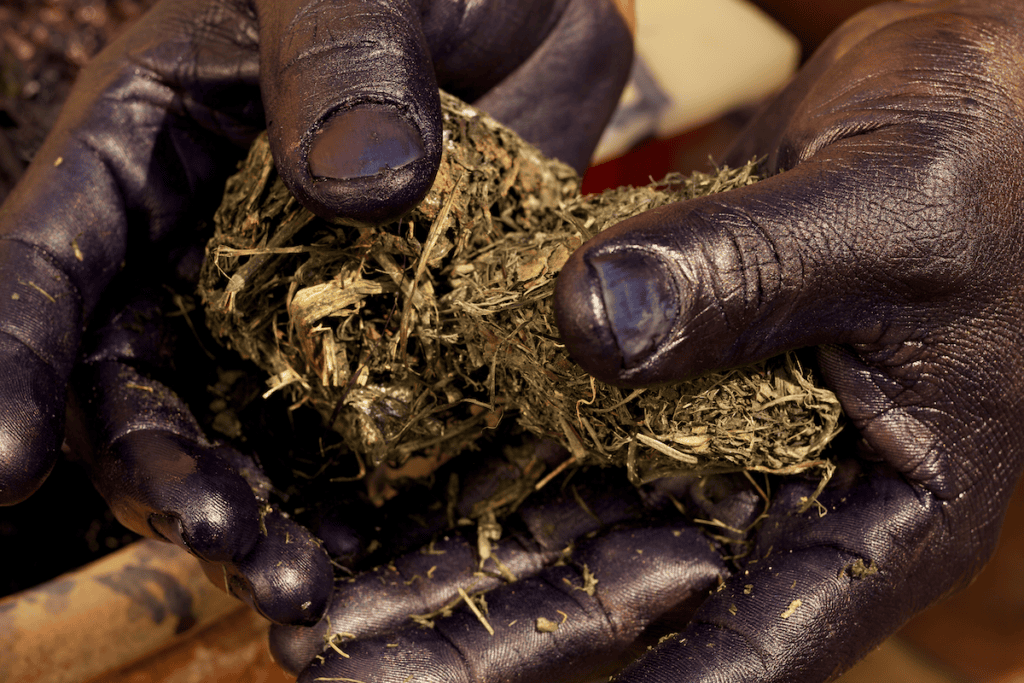
We at Fiber Arts on 4th love indigo! So much so, in fact, that the colors in the our logo represent the color of the natural dyes produced by madder root and indigo.
Indigo is a wonderful natural dye in part because it works with both cellulose/plant fibers (cotton, linen) and protein/animal fibers (silk, wool). Additionally, it does not require a mordant for the dyed fabric to keep its true blue.
Many cultures have been touched by Indigo (Indigofera), as you can see in this map from the Royal Botanic Gardens’s Kew Gardens.
For centuries, people from regions where indigo does not grow easily have tried to mimic its hue. Cultures have used natural dyes from plants like woad or lapis, or, since the 1970s, have tried to replicate indigo through synthetic means.
To shine a spotlight on this pigment-filled plant, we wanted to share the rich and global history of indigo dyeing.
While we can’t fit every culture which uses indigo in one post, here is a short history of indigo around the world.
Peru, Guatemala, and El Salvador
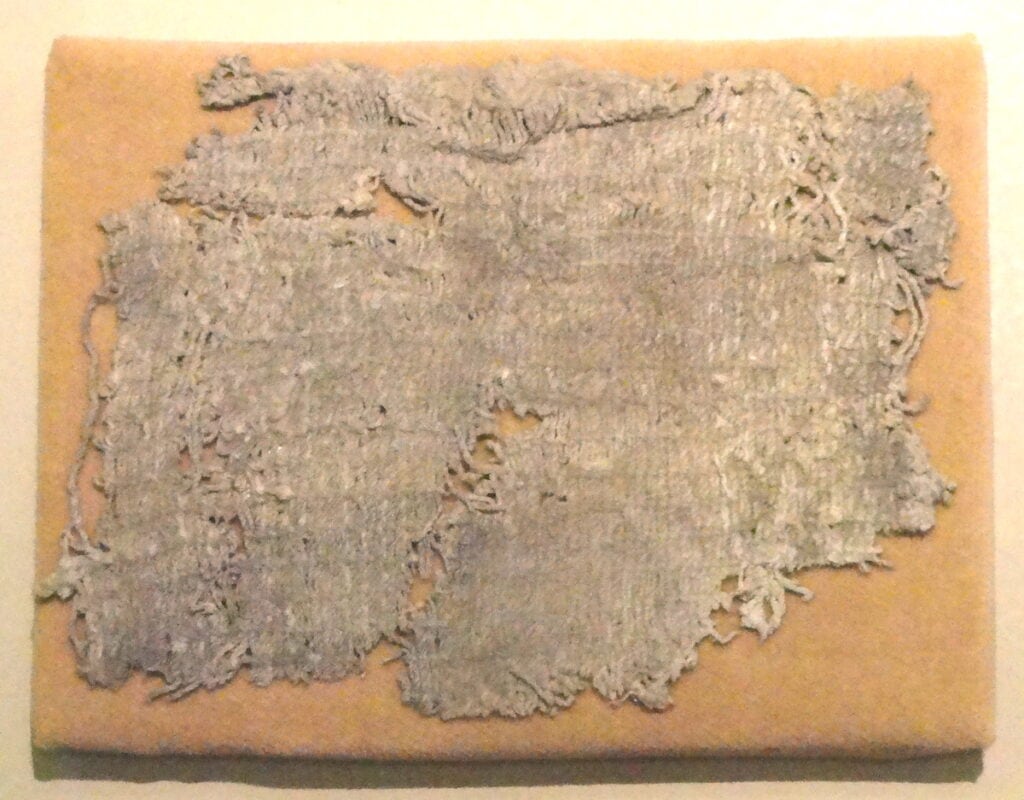
Archaeologists have found evidence of indigo in King Tut’s embalming linen, as well as a Babylonian cuneiform tablet indicating the indigo dye process. However, the oldest existing and known sample of indigo is from the other side of the globe. Archaeologists discovered the oldest found fabric dyed with indigo, a 6,000 year old cotton swatch at Huaca Prieta in Peru.
When Spanish colonizers first arrived in South and Central America, they noted the blue pigment used for body paint, pottery, and dyed textiles were similar to the indigo they had seen imported into Europe. They soon set up indigo plantations in Guatemala and El Salvador. The intense pigment from the plants still appears in the region’s textile traditions today.
India
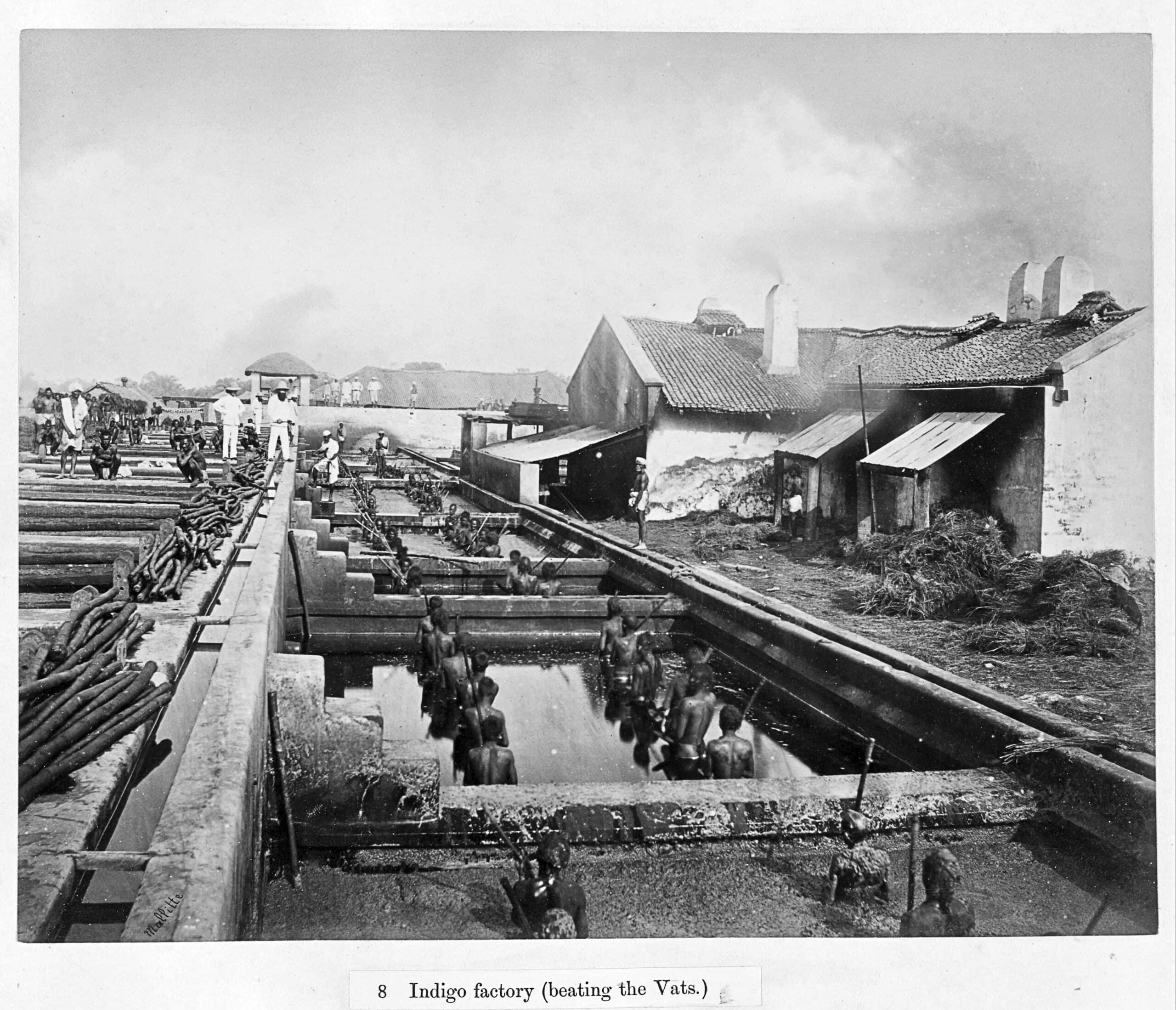
The word “Indigo” derives from the place where the ancient Greeks and Romans sourced this plant: India, long renowned for its fine textile exports.
British and French colonizers established indigo plantations due to high European demand for this “blue gold.” European planters forced the cultivation of indigo over food crops, leading to impoverished conditions and indentureship for local workers. In the Indigo Revolt of 1859, laborers across Bengal revolted against the European planter class and led to the formation of the Indigo commission to improve indigo workers’ rights.
Japan
Aizome, the term for indigo dyeing in Japan, arrived in Japan 1,400 years ago through the Silk Road.
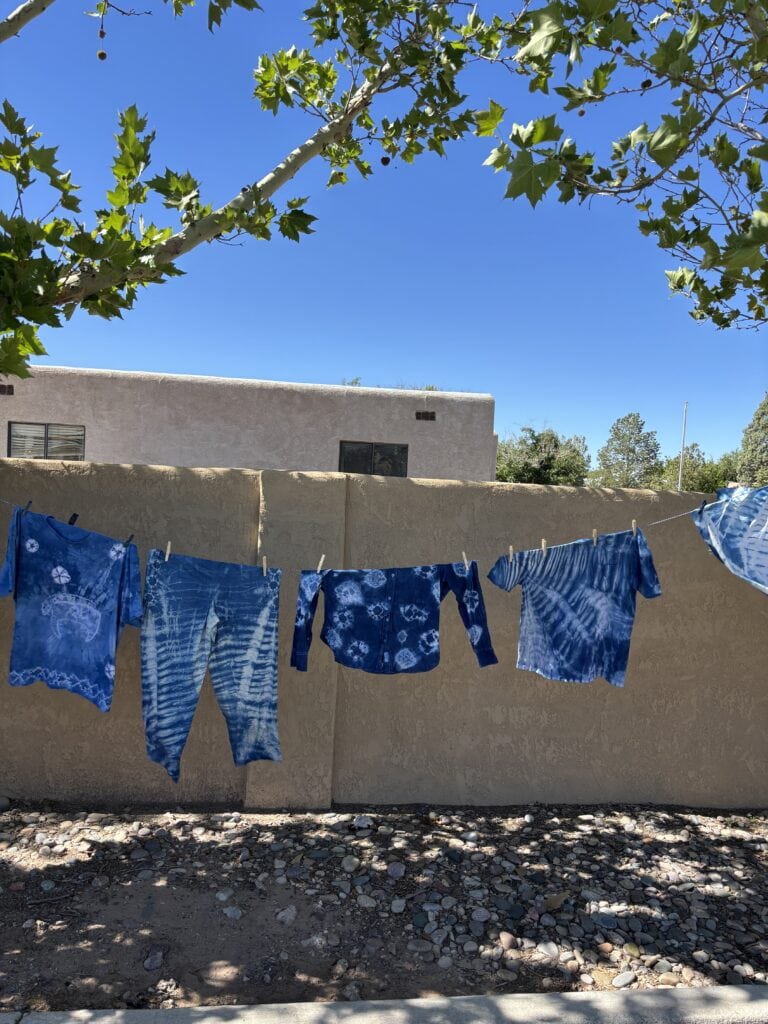
The tie-dyeing method of Shibori includes many techniques for creating intricate resist patterns, including hand-stitching, folding cloth around a pole (Arashi), or clamping folded fabric (Itajime).
Nigeria
Kano, an ancient trade city in Western Nigeria, is home to the oldest dye pits in Africa.
As Gasali Adeyemo notes, Yoruba people consider indigo both healing and productive:
“Since the olden days, people used indigo for medicine as well as a dye; it cures an upset stomach. People also use indigo to ward off viruses, with Yoruba people painting houses with indigo to prevent the sickness from entering.”
Take part in these traditions by taking Gasali Adeyemo’s four-day Traditional Yoruba Adire Eleko & Tie-Dye with Indigo workshop.
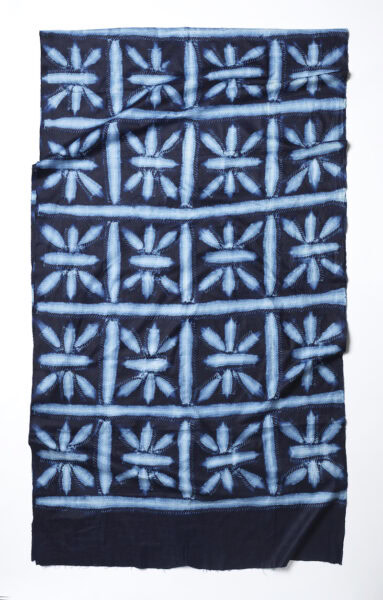
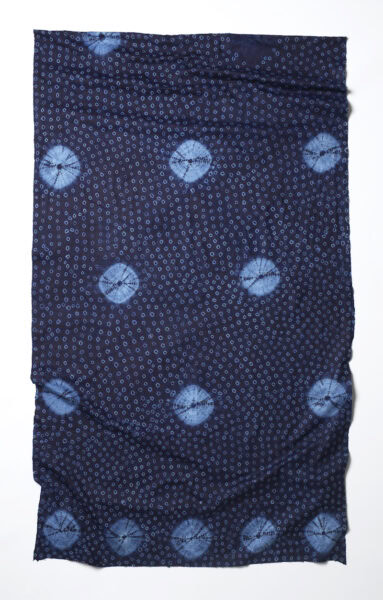
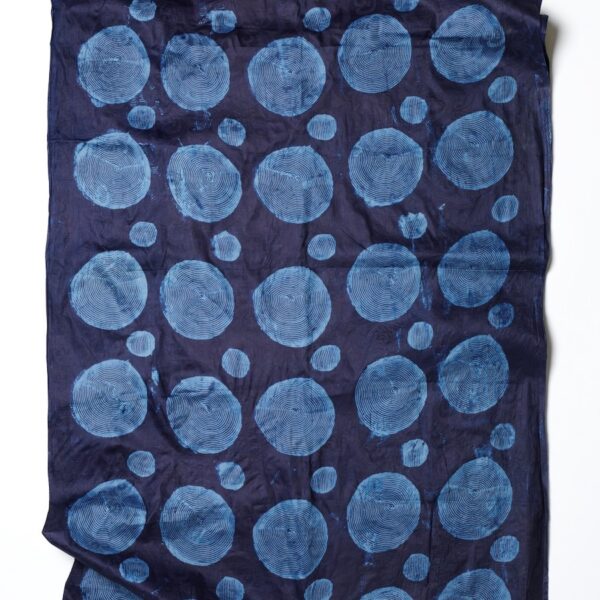
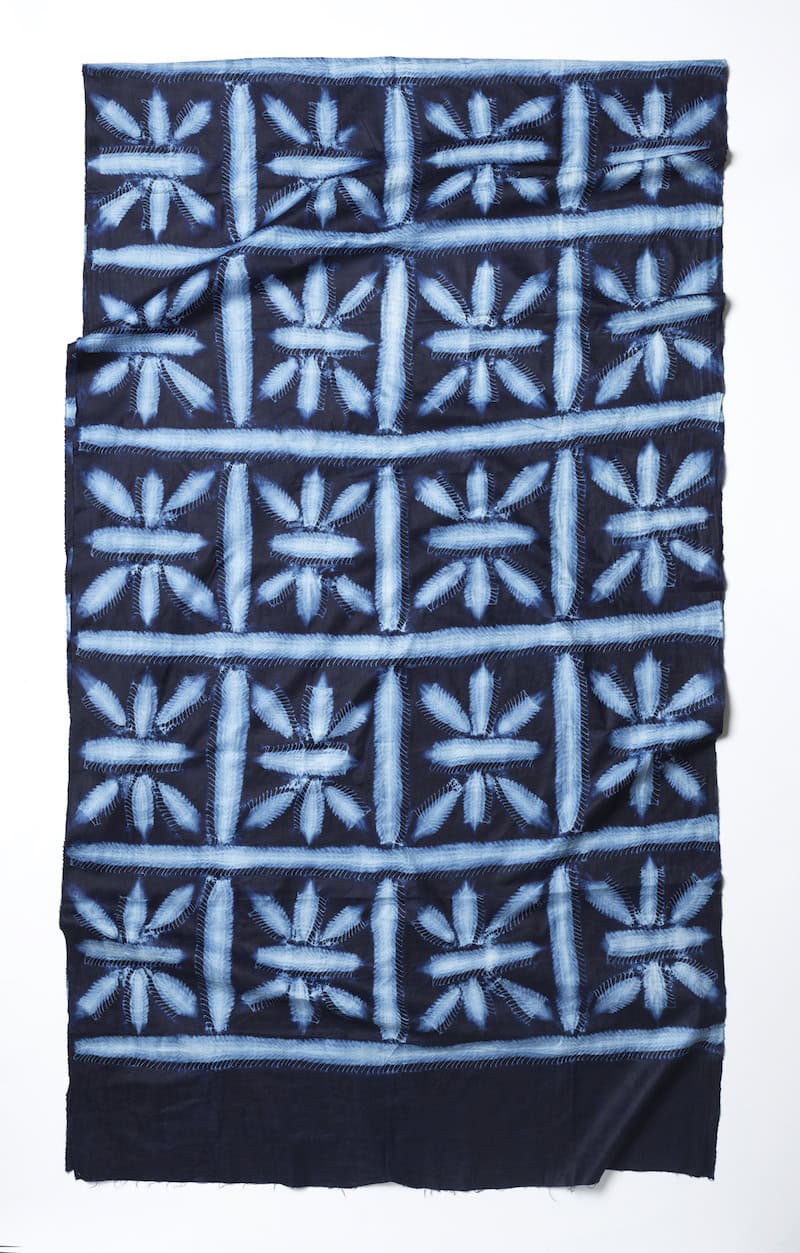


Much like the process of dyeing with the plant, this history of indigo can be messy, but with beautiful results. This is but a small history of this plant’s vibrant history. Check out additional reading below to dive deeper into the dye.
Additional Reading:
- Indigo by Jenny Balfour-Paul
- True Colors: World Masters of Natural Dyes and Pigments by Keith Recker
- A Weaver’s Garden: Growing Plants for Natural Dyes and Fibers by Rita Buchanan
- The Secret Lives of Color by Kassia St. Clair


-bw.jpg)